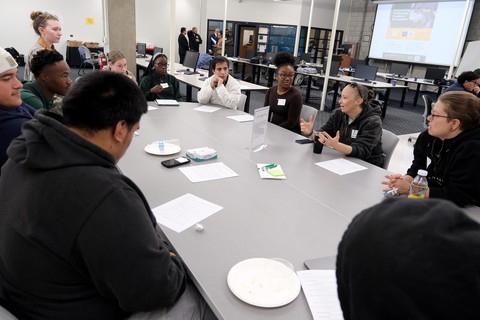
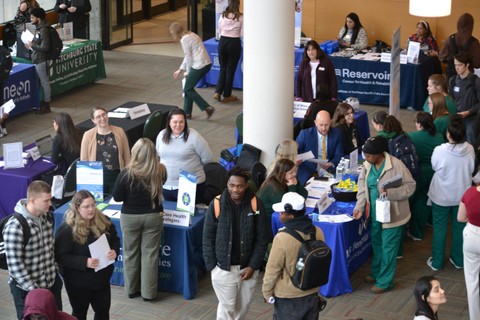
Why Network?
- Access the Hidden Job Market: Up to 75% of job openings are not posted publicly; this is known as the “Hidden Job Market”. Having contacts in the field can help you find out about current or potential job openings.
- Get Referrals: Many of these “hidden” positions are filled through referrals from current employees or are kept confidential by the company. Developing a strong network increases your chance of being on that referral list.
- Gain Insight: Networking allows you to learn about a career field of interest, get insider information, and practice your interview skills.
Networking Basics: Contacts and Your Professional Pitch
Who is in your Network? It is already larger than you think! Consider reaching out to:
- Alumni—a powerful resource for students and job seekers.
- Academic Advisors and Professors.
- Internship Supervisors and Coworkers.
- Family, Friends, and Acquaintances who work in your field.
- Current Classmates.
Prepare Your Professional Pitch
Take time to clarify your career goals, and be ready to introduce yourself concisely when you meet a new contact. Your pitch should be a brief, 30-second introduction that quickly covers who you are and what you’re hoping to learn.
Key Elements of Your Pitch:
- Who you are: Your name, school, major, and class year.
- What you do/are interested in: A brief statement about your current activities or career focus.
- The Ask/Purpose: What you are hoping to gain from the conversation (e.g., insight, advice, a connection).
Sample: “Hello, my name is Kai Lee, and I am a graduate student studying Data Science here at Fitchburg State University. I am currently researching entry-level roles in the tech industry and was hoping you could share some insight into your career progression at your company.”
The Informational Interview
An informational interview is a brief, informal conversation with a professional in a career field that interests you. This is not a job interview; it is your chance to gather insider information, build your network, and determine if a career path is right for you.
How to Conduct an Informational Interview:
- Identify a Professional: Find a contact through your personal network, by searching for an alum on LinkedIn, or by following up with someone you met at a networking event.
- Reach Out: Send a professional email or LinkedIn message to request an interview. Explain your purpose for reaching out and ask for their availability. If you don’t hear back, follow up once after about a week.
- Prepare Questions: Draft a list of questions that will help you learn about the profession. Aim for 8-10 prepared questions.
- What are the duties performed during a typical day, week, or month?
- What kind of education, training, or internship experience do employers look for?
- What are the opportunities for advancement in this field?
- What recommendations do you have for college students interested in a similar career path?
- Follow Up: Always send a thank you email or LinkedIn message within 24 hours to the person you interviewed.
Email Subject: Student Request for Brief Informational Interview
Dear [Name of Professional],
My name is [Your Name], and I am a [Year, e.g., Senior undergraduate] majoring in [Your Major] at Fitchburg State University. I found your contact information on [How you found them, e.g., LinkedIn Alumni tool, company website] and was very impressed by your work as a [Their Job Title] at [Their Company]. As I explore potential career paths, I am particularly interested in learning more about [Their Industry/Field]. I am reaching out to professionals like yourself to gain first-hand insight into the industry and the skills required to succeed. Would you be open to a brief, 15-20 minute virtual meeting or phone call sometime in the next few weeks? I am flexible and happy to work around your schedule.
Thank you for your time and consideration.
Sincerely,
[Your Name]
[Your email and phone number]
Tools to Build Your Network
LinkedIn –The world’s largest professional networking social media platform, connecting you with millions of professionals, including our alumni. Use it to: Find alumni connections at specific companies; research career paths by reviewing professionals’ job histories; and reach out to alumni for advice when applying for jobs or internships. Remember to keep your profile up-to-date and professional. Check out the Fitchburg State alumni page here: https://www.linkedin.com/school/fitchburg-state-university/people/
CareerShift – A powerful job search and career management tool that helps you tap into the hidden job market. It provides access to a database with direct email addresses for millions of professional contacts. Use it to: Find current job connections, make meaningful new contacts, research target companies, and manage your correspondence automatically.
Professional Associations – Organizations dedicated to a specific industry or profession that often offer discounted student memberships. Benefits include: Networking with thought leaders and potential hiring managers; accessing exclusive “members only” job boards; gaining access to industry-specific information, journals, and scholarship opportunities. Talk to faculty in your major or Career Services and Advising for some ideas.
Next Steps
Need a review of your LinkedIn profile, want to practice your professional pitch, or want guidance on your networking strategy? Reach out for a one-on-one meeting!